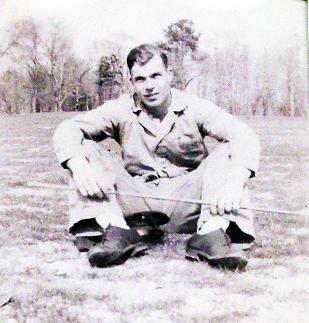
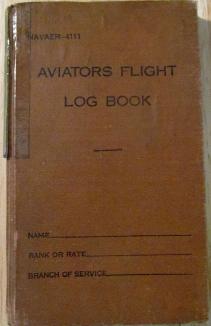
I'm 92 now, but I'm going back to when I was 12. That was in 1934. For cooking at home back then, we had a wood and coal stove at first. Then we had a kerosene stove with a two or three gallon jug. It had two burners. Kerosene was ten cents a gallon. My mother used to take in state children. One time she had six of them. Mrs. Scanlon used to come from Boston to bring clothes for the kids. We'd go picking blueberries in the summer. We'd probably end up with about fifty quart jars of them. My mother would use some of them to make dumplings. Sometimes we'd have stewed blueberries. She'd make seven or eight loaves of bread at a time. There would be a crease in the middle and they'd be about ten inches long. She'd grease the pans with lard. We had iceboxes back then. You'd have to buy meat one day and use it by the next. The ice wouldn't keep it that long. For entertainment, we had Atwater-Kent radios. We had a brook down back where we'd go swimming. My teacher in school at Purchase Street was Miss Davoren. She was a beautiful teacher. There was another teacher there named Miss Dorothy King. Every year I'd bring a Christmas tree there. I never charged them. I just did it for the kids. I started doing that when I was about ten. I'd buy one cheap or I could even go out in the woods and cut one. There were two classrooms. One was first and second grades with Miss King, and the other side had third, fourth and fifth with Miss Davoren. There was a little school way up further that had been closed by that time. At recess we'd run around and there were some rocks up in back that we could climb on until the bell rang. Then you'd have to get back in a hurry. My grandmother used to give me a penny to go down to the store and buy a bar of soap for her. Funny how you remember things like that. She died in 1929. She was 79. My father was 63 or 64 when he died. He had worked at Drapers in the brass foundry. Before that he'd been an iceman and lived in Stoughton. Gussie Eden was my best friend when I was a kid. He got killed when he was 29 years old. Carl Eden ran Stamp-it Machine. There was also Eddie and Charlie. Eddie was the original owner of Stamp-it. He lived in Hopedale, way up on Dutcher Street. McCrum who had Hopedale Pressed Metal, and Eden were married to sisters. They were both redheads. Carl and Gus were blondes. The father worked in the quarry. From my house, I could look out the back window and see the light at the top of the pole at the quarry. That was the pink granite quarry. Some of the stone was used at the train station in New York. Their mother used to work for Mr. Ellis at the bank. She'd walk back and forth from Dilla Street. The Ellis son was a banker, also. Lived on the left hand side. I went into the Marines during the war. I enlisted in 1942 and got out in November 1945. I was in the Marine air corps. We'd escort the convoys, looking out for subs. Sometimes there would be 100 ships. Once we forgot to change the gas tank and dropped 3,000 feet just like that. Scared the shit out of me, but we caught it in time. Otherwise I wouldn't be here. I did about 760 flights. We were out about an hour and a half each time. We'd go out and patrol. Then we'd come back and somebody else would go out, to cover the convoy. I was on Engibie, Kwajalein, Palau, Majuro and couple of others. When we were in Kwajalein, all the trees were cut off because of the battle there. I also spent six weeks doing anti-sub work in Florida. The plane was a Douglas Dauntless. (Later we flew the SB-23.) The wings were perforated so that when you dove down, it would slow you down. From 12,000 feet we'd more or less glide down to do bomb practice. When you pulled out it would be about 3 Gs. You'd almost pass out. We used to fly formations of twelve - six and six. Usually it would be a major who escorted us. We had a radar scope and we used code so that the Japanese wouldn't catch it. It was quite an experience.
that. I didn't want to be crippled for life. It was a place where you either died or you didn't. In our squadron there were seven or eight who didn't make it. Somebody would be right beside you in formation and then they'd get hit. Once a couple of captains were fooling around and they hit wings . Both planes went down. The only one who died was one of the gunners. Huddleston was his name. I don't think the pilots who were fooling around were ever reprimanded. They should have been. We all chipped in to send money back to Huddleston's wife. The other three got back. But Clark had to be picked up. He was in the water. He had a Mae West on that kept him afloat.
used to work. I didn't look for somebody to hand me something. In September, Hancock would give us a three-day outing in New York or Lancaster. We had that to work for. You had to qualify. I'd work until ten o'clock quite a few nights. At one time I made 110 sales in three months. I didn't let any grass grow under my feet. I was polite with the people, and I'd point out why they should probably do something. If you treat the people right, they'll listen and understand what you're trying to tell them. Even today, I tell people, with your pay, what should you do first? Pay yourself. Then your bills. Then someday you'll be able to come to a place like this. If you don't work, you don't have anything. My wife was very smart. She got a two-year scholarship to Hill College. She had been valedictorian in her high school class. Blackstone. She worked at the Pontiac-Cadillac place on the corner of Green Street and 140. Herbie Sherman owned it at that time. There must have been at least five of six different owners in the years that she was there. Each time a new one came in, she'd get a raise. She wouldn't leave work unless everything came out exact. Not a penny off. She could do 135 words a minute in shorthand, and she could type 65 words a minute without making a mistake. She was very smart. The lowest mark she got in college was a 93. I have a son and two daughters. My daughters are Kathy and Nancy and my son is Wally. Wally and I are both Walter F. Browne, but my middle name is Freeman and his is Francis. I took care of the tickets for the clambakes the Maspenock Rod & Gun Club had. At one time I had 619 people at a clambake. It was probably about three or four dollars for a ticket at that time. We'd have fishing derbies there too. When 495 came through they had to close the old pond and they built a new one down back. I was pretty active there at that time. I was chairman of the board of directors. Bates and the Barrows and Wes Shattuck in Mendon were buddies. Wes was the Mendon Fire Chief. He married a Bates girl. He worked for Hancock. Purchase Street - The 1930s At the beginning of Purchase Street in Milford, there was a family by the name of Fales. They had two daughters, Louise and Eunice. Louise married Freddie Earl. Then there was Tony Mastroiani. He was the veterans' agent in Milford. Reynolds owned that house first. Across the street was the Feruccci family. They had two boys and a girl. The girl was an RN. She married a guy who had a restaurant. In the next house up was a family by the name of Kerr. Margery was the daughter. On the other side was a Mr. Phillips who was a helicopter pilot. His wife was Skip Curley. Going up the road was where P. Eugene Casey lived. I think he was a county commissioner. Then there was a family named Spencer. They had two daughters. Across the street was George Larkin. He was a World War I veteran. He had two daughters. One married John Neal. Next, on the corner of Fells Avenue was a family by the name of Scott. Across the street was McCormick. He worked for the telephone company. Up the road was another Casey. One of the Casey brothers. Fred, I think. In the next house were the Coffeys. They had two boys and two girls. Fred Coffey married Gloria Consigli and Francis Coffey married Rita Consigli. Across the street was a man named Ellis. He was president of the Home National Bank. His son, George Ellis lived about two houses up the street, on the other side. He was also a bank president. In the next house were the Clarks. This was where the first cows were on Purchase Street. There were two sisters and a brother. They were pretty old. I was a paper boy at that time, and at Christmas, Clark and Ellis would give me a dollar. That was big money at that time. Up the road there was a Curley, and then there was Gordon Shaw. He was a judge. Further up the road there was O'Brien. Across the street was Droney. Across from Droney was Tower.. They had John, Myron, Tina, and I think Laura was the name of another one. One of the Droney girls married a Moore, related to the state senator. He had three daughters. He worked in Boston and would go back and forth on the train every day. Then there was a family by the name of Dion. He had two sons. He used to run the bowling alley on Central Street. Davis Alley was another one. All the big shots used to bowl there. I think it was two strings for a quarter. Carl Burpee who bowled there had just one eye. A family named Fricker lived near the Dions. There were four boys and quite a few girls. One of them married Stanley Keene. One family on the street I remember, the old man would get drunk. He was a wild one. Gene Pantano was a cop at that time. He'd go in there and they'd wrestle right down the stairs. I was friendly with one of the boys. We used to bum a ride down to Franklin. We'd wait about an hour to get a ride. Coming back we'd wait two hours to get a ride. We'd do it just to go to another town. Lamora was on the corner of Fountain Street Then there was Harris. Across the street there was a little store. Aggie Peterson was in charge of it at that time. I think the Consiglis owned it and lived in the house beside it. They had thirteen children. Georgie, Aldo, Arthur, Frannie, Rita, and Gloria. They'd raise a pig and kill it every fall. They'd use every bit of it. Rita married Francis Coffey. Gloria married Freddie Coffey. Eleanor married Murphy who owned the Mobil station at the corner of 140 and Water Street. Rockwood from way up Purchase Street used to run the store before Aggie Peterson did. He was an old guy who used to sit on a rocking chair out front on the cement until a customer came along Further up there was Robert Bickford. He was a plumber. Jimmy Adams, who married one of the Peterson girls lived to be 102. He was a painter years ago. Him and Young. Next door to Adams was a family by the name of Rouleau. They had three daughters and one son. June married a doctor. Next door to them was another Rouleau. He was a mechanic in the Lincoln Square Garage, I think. He had a daughter, Alice, and a son. Alice was a ballet dancer and the son, Eddie owned the Myriad Ballroom in Mendon. Then there were the Shermans. They had a daughter named Rosalind who was a couple of years older than me. Across the street was a little schoolhouse where I went to first, second and third grades. It's where Peter Balian lives now. On the corner of Dilla Street there was the Sannicandro family. There was Louis and two daughters. Across the street at that time was a big stone watering trough where the horses would come in and drink. There was a field nearby and in the back there was a guy named Cutter. They had Roy, Harold and Agnes. Next door was Tootie Peterson and his sister, Anna Mae. Then there was Perry Henderson. He had lived in Framingham at one time, and been a selectman there. Next to them was John Henderson who had been a selectman in Milford. He also drove the Purchase Street school bus. Before that, Carl Seastrom drove it. Next door there was Mrs. Peterson, a Swedish woman. In the winter she would call me in and give me a nice Swedish roll and a hot cup of cocoa when I was delivering papers. There were two Harrison sisters who lived across the street. There was a guy with the Johnson Trucking Company. Then there was a family by the name of Smiley. They had one daughter. Next there was Johnson. Irma was the daughter, She went to school with me. Next door to them was Bernardi. They had four children. Virginia, Tommy, Bobby and Eleanor. Across the street was a family by the name of Marino. They had a large family. I remember Maggie, Lydia, Tony, Louis, Attilio, Tillie and Kenny. Next to them was Watson. Just a husband and wife. He ran the ice truck. That's where we used to get pieces of ice off the truck. Small chips. Next door was Blackmore. He ran Ted's Diner. I think Sharkey took it afterwards. Next to them was Watson. Just a husband and wife. After Blackmore there was Chard. They had two daughters. Across the street was Butcher. He used to work in the Archer Rubber shop. The son, Eddie, worked at the Pine Grove Cemetery. There was a daughter, Emily, who was married to Billy McKinley. Then there was Barney Oldfield who worked for Seaver's Express. There was also Harold and Freddie. Freddie married one of the Marino girls. There was also a girl named Hildegarde. She worked for the telephone company. She married Harold Lutz. Then there was Hines. Billy and Dotty. Dotty worked at the Shop & Shop. They had an aunt named Ellen who lived with them. It was at the corner of Harris Avenue. Then there was Villa. Betty, I think, was across the street from O'Grady. There was a retired fellow there. I used to go down and play cribbage with him. He'd give me a cup of nice hot milk before I left. There were also two sisters. Next was Ivanoff. They had a little store in the house. They also raised rabbits. Big ones, like dogs. He worked someplace; probably at Drapers. Next door was Spofford. That's where Arnold Jenkins lived later on in life. Across the street was a cow field. P. Eugene Casey had about ten cows in there. Next was my house; 185 Purchase Street. (The street numbers were changed later. It's now 149.) We had a family named Casey who used to rent upstairs. They had two boys, Donald and David. David died about two years ago. He went to school with me. Next door there was McKinley. Billy McKinley married Emily Butcher. Albert McKinley was killed in World War II. He was pilot. I think it was a P-40 or a P-38 that he was flying. He was a smart person. The McKinleys were a nice family. The father was a painter. Then there was Ruth McKinley. She'd had a bad accident and had her head cut off down in Florida. Robinson was her husband. He used to live on Grove Street. Then there was Shirley, Marie, Avis and Louise. Marie married Beradi who had the garage on East Main Street. Shirley was married to Moore who worked for Western Union on Exchange Street. Avis married Bates who was a cop in Mendon. Beside them was a big field, and across the street there was Thebideau. Beside Dilla Street where Louisa Lake is now, there used to be a pasture. They used to bring the cows across the street into it. That's where they'd feed for the day. His daughter, Leblanc, build a house beside him. They had apple trees. King apples they were called. I never saw apples as big as they were. Up the road was Clarence Draper. He worked over at the shop. I used to go up there and work, digging out underneath his house to put a cellar in. Across the street was another Marino. He used to mark the ice with a marker and cut it into blocks. There was an icehouse on Dilla Street. He had a conveyor, a chain thing, to get the ice up into it. He used to saw wood, too. It would sell for a dollar a cord. His daughters' names were Lydia and Maggie. Lydia lived to be 99. Next there was Viele. He had two daughters. One, Arlene, married Joe Blackmore. I don't know about the other one. Then there was a Brown family with seven children. The father was a one-eyed painter in Milford. The ones I remember were Ruth, Mabel, Eddie, John, and Francis. Next to them was Dominic D'Alessandro's family. He was a selectman at one time. They had Dominick, Frank, Tony, Louis, and Virginia. Stoddard was Virginia's married name. Next to them was Pickering. Mr. Pickering was a boss over at Drapers. He had one son named Arnold. Upstairs was a couple named Walker. I think he was a truck driver. I think Mrs. Walker was the sister to Mrs. Pickering. On the other side of the street was a family named DeBoer. There were three boys and two girls in the family Henry, Martin, Sidney, and Jeanette. I never knew the oldest daughter's name. Henry worked in the shoe shop. He later married Doris Goneau and still lived on Purchase Street. Elizabeth Goneau married Cahill. Jeannette married Chambers. I used to work for them for twenty-five cents an hour. Across the street was Williams. I used to work for him for twenty cents an hour. He was putting in a water system to run up to the henhouses. It was hard to do because there were so many rocks and we had to dig it deep enough so that the water in the pipe wouldn't freeze in the winter. His wife wouldn't let me pick up the eggs; she'd pick them up. Next was a couple named Lawler. A husband and wife with no children of their own, but they'd take in children. State children as they were called back then. Up the road on the other side was Satani. They had cows. I used to go up there and for ten cents buy a quart of milk. Herman lived in that house later. Across the street from them was John Erickson. He was a real good carpenter and built his own house and his brother's house. His brother, Arthur, lived next door. He drove busses for the Johnson Bus line. Then there was McKenzie. He was a boss at the electric company. Mrs. McKenzie's mother lived next door. Then there was a guy named Shaw who used to sharpen saws. Next to them was a family by the name of Cenedella. Near them was Knox. Clarence was quite a singer at the Methodist Church. They had Robert, George, and Mildred. Beside them was Goneau. Felix Goneau used to take violin lessons. He'd walk back and forth to somebody downtown where he'd have the lessons. Mr. Goneau's nephew was fooling around with a gun and shot and killed him by accident. John Bickford lived next door. He sold Maytags and he also sold investments. Helen Elliott was his daughter. She was a volunteer at Milford Hospital for years. She married Bill Elliott. Next to them were two Gleasons who at that time were probably in their eighties. Across the street was D'Amalio. He had a daughter, Kathy, who married Ernie Arsenault who worked for the gas company. There was a son named Joe. Next to them was Sherwood. He had a little store there. He used to come to the house quite often and visit my mother. They'd talk for hours. Oscar Williams used to come and talk with her too. People used to do that more than now. Everyone knew all of their neighbors. Ernie Lucier was a timekeeper over at Draper's. Originally he lived down on Dilla Street, but he bought four houses up on Purchase Street. Rouleau's, Sannicandro's and Bickford's houses. He owned two of the Rouleaus' houses. Then he lived there himself where Sherman had lived before. In 1934, Ernie lived up on Silver Hill Road. (The 1927 Milford directory lists an Emery Lucier on Silver Hill Road.) Further up the street there was another Lucier. He had Oma, Paul, Rita and Jeanette. Jeanette Lucier married Aldo Allegrezza.. They lived on the corner of Dilla and Purchase streets. He worked at General Motors in Framingham. His brother Tony was a selectman. He used to sing at churches for money. He had that kind of a voice. Then there was Walter Conley, the Milford policeman who got killed during a bank robbery. I think Stone owned the house. Conley had a brother and a sister. His sister Rita married Andrew Keefe and they had six children. He was a demolition guy. His son Brian put up a building on 140 on the left hand side and took over the dynamite business. Nice kid. Moroney lived beside Conley. He used to walk down to the library twice a week. Then there was Arthur Clarridge. He was a contractor who built houses with his son Lee, and Curtis Nutter. His house was where Marilyn Lovell lives now. He had cows, too. There was a son, Fred, and a girl who was 39 when she died. They'd work building houses. Next to them was Black. Mrs. Black used to come up to the school to start the furnace in the morning. She had several children - Peter, Donald, Norman, Eleanor and Margery. I think Eleanor is still living. She's 94. She married Billy Quirk. Donald was my age. Next to them was Higgins. They had a daughter who married Otis Morey from Haven Road.. Then there was Chet McMann. He had three children. Across the street was the schoolhouse. Then Sciappucci lived up there. There were five brothers in the family. They had cows. William Griffith lived across the street. Next to that was Billy and Lillian Rowe. Their son was a plumber. Across the street was Spindel. Spindel was quite a name at that time. The old man lived on the corner of Haven Street. Nat Spindel worked at the Water Company. George Spindle was a Boy Scout leader, but I don't know what he did for a living. Next to them was Roland Peloquin. He was a plumber. Beyond him there was William and Charlie Costigan. They lived down off of Eben Street. His father used to raise cows. Tim Cronan had a covered milk wagon. He'd deliver milk, but also he'd stop at the c orner of Dilla Street where there was a watering trough for the horse to get a drink. Tim Cronan must have been related to Mrs. Costigan. Probably her brother. One Costigan married a Dalrymple girl. Charlie Costigan used to come down and plow our garden. He married a Kearnan. They had nine kids and lived on Purchase Street years later. Rubensteins, who lived near there had a fruit stand on Central Street. Up the road was Waldo and his brother Grant who lived on the corner of Camp Street. Across the street was Morey. They used to raise hens. In the fall he ran a cider mill and we'd bring apples up there. Next door there was Forbush. Later on he was a pilot. Up the street was a family by the name of Lamb. I don't think they had any children. Across the street was Hose 4 firehouse. Next to that was Mr. and Mrs. Gregory. They had a son named Walter. In the next house there was a man who was blind. He'd go downtown with a shopping bag and walk back. That was over three miles. The Manoogians were across the street. Arthur was a carpenter. Next was Sammy Griffith and then D'Amalio. He raised pigs. Then there was Zeph. He was sort of blind. He'd walk down to Dilla Street where he had his garden. That was over two miles. There was Jimmy, Johnny and a daughter. The fire barn was up there. There was a Walter Gregory who married a Hannigan girl. Next door to them were the Kimballs, Steven, William and Harry. Bill was the father of the guy who has the sand and gravel company now. A little further down was a guy who used to sharpen saws. He lived across from Knox. The oldest Knox girl was probably Alice. Bert Knox worked at Nelson Auto, which was next to the State Theater. There was a Hannigan who ran the gas station on the corner of Main and Pearl streets. Across the street was a Murphy family. Frank Murphy used to bring grain from the train to disperse among the people who had hens and cows. Murphy had about twenty cows. Next to them was Hannaford. He ran the gas station on the corner of Pearl and Main. Gusty Peterson lived across the street. He was an auto mechanic. Next to him was Daley. Dick Ashcroft lived across the street. He worked at the machine shop on Exchange Street, across from Sherman's Laundry. Billy Erickson, the electrician, lived up a little further. There weren't many houses way up there at that time. Now it's unreal. Malcolm Warren used to shoe race horses. He bought a van or truck and went into business hauling. John "Gilly" Gilbertson lived way up at the end of the street. His wife was a Rockwood. There were two Rockwoods who lived up at the end of Purchase near Gilbertson. My wife and I were pretty friendly with them. There were two Griffiths. One lived on one side of the street and one on the other. One was drowned in the service. Sammy died about four years ago. I think his wife's name was Viola. Bolin lived on Branch Street, a street off of Purchase Street. Seastrom, a Swedish guy, used to drive the bus. "You don't got your pass, you hoof it." One of his daughters worked at the bank. There were lots of Caseys at that time. Gardellas too. Freddie Roberti was a plumber at that time. Near Roberti's there was an Erickson family. The daughter was a school teacher. Across the street was a family by the name of Cunningham. That was way down beyond the store, across from Fountain Street. John worked for the sewer department. Ernie was another one in the family. They had a daughter who married Joe Greenlaw. Purchase Street was a good place for a kid to grow up. Everybody knew everybody and it was a friendly neighborhood. Walter Browne, April 2014 Milford Menu HOME . |
Walter Browne of Purchase Street Milford, Massachusetts |



The Browne home on Purchase Street. Originally the number was 185.Now it's 149. |
Mr. Walter F. Browne, 95, of Milford MA, died Thursday (November 10, 2016) at Blaire House of Milford after a period of declining health. He was the beloved husband of the late Helen A. (Lucek) Browne, who died in 2012. Mr. Browne was born in Boston MA, the son of the late Rupert and the late Teresa (Swain) Browne. He was a graduate of Milford High School, Class of 1939. Mr. Browne was a WW II US Marine Corps veteran serving in the air corps in the Pacific theatre as a tail gunner. He later was employed as a life insurance agent for John Hancock Life Insurance Company for over thirty-five years. Mr. Browne was a longtime communicant of St. Mary of the Assumption Church. He was also a member of the Maspenock Rod & Gun Club and a member of the American Legion. He had also served as a member of the Milford Finance Committee. Mr. Browne was an avid golfer and fisherman and he loved to travel all over the United States with his late wife. Mr. Browne is survived by 1 Son: Walter F. Browne and his wife Kathi of Medfield MA; 2 Daughters: Kathleen B. Sheffler and her husband Keith of Hopedale MA and Jupiter FL, and Nancy H Sala and her husband Albert Butch Sala Jr. of Mendon MA; 6 Grandchildren; 7 Great Grandchildren; and several nieces & nephews. He was the grandfather of the late Andrew Sala. His funeral, with Military Honors, will be held Monday (November 14th) from the Edwards Memorial Funeral Home, 44 Congress Street, Milford MA followed by a Mass of Christian Burial at 10am in St. Mary of the Assumption Church, 19 Winter Street, Milford MA. Burial will follow in St. Marys Cemetery in Milford MAS. A visiting hour will be held Monday morning (November 14th) from 8: 30am to 9:30am, prior to his Funeral Mass. Visit www.edwardsmemorialfuneralhome.com for condolence book. In lieu of flowers, memorial donations may be made to The Andrew Sala Scholarship Fund, c/o The Greater Worcester Community Foundation, 370 Main Street, Suite #650, Worcester MA 01608. |