Founders’ Park
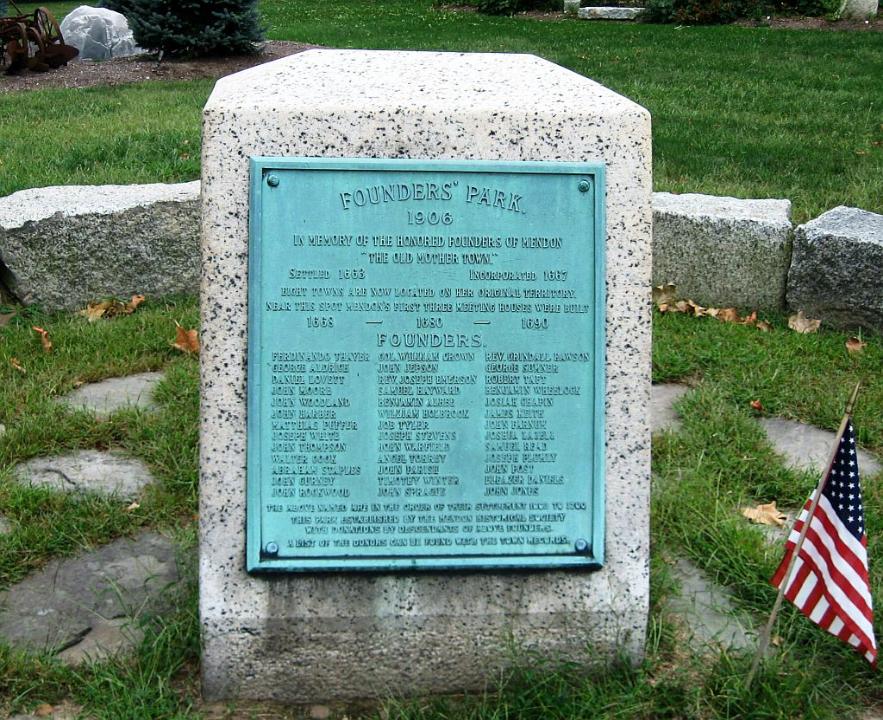
occurrences that have taken place in Mendon’s great history. The first meetinghouse was built here in 1668 for the purpose of conducting town meetings and worshipping God. It was built on Joseph White’s lot adjacent to his sawpit. His property included the land between Muddy Brook and Willowbrook. (Drive-in theater to site of former Lowell's Restaurant.) The building was twenty-two feet by twenty-two feet. It was the center of life in the new frontier town carved out of the wilderness. It was destroyed by fire in February 1676, during the King Philip War. A new meetinghouse was built here in 1680, after the resettlement of the town. A third meeting house was built in 1690 to accommodate population growth. This land served as the town’s cornerstone of democracy and Puritan theology. The new town of Mendon was eight miles square. It included a significant area of the Blackstone River Valley that was gradually resettled due to industrialization. Strategic river locations allowed for new occupational opportunities. Some people chose to give up a life style of farming in order to work at a newly constructed mill or factory. Small outskirt villages grew to become independent towns. It meant not having to travel to Mendon Center to attend town meetings or to worship. Bellingham, Uxbridge, Upton, Milford, Blackstone, Northbridge, Hopedale, and Millville grew away from Mother Mendon to incorporate new industrial based economies. Mendon remained agricultural and was the main source of farm produce for the Blackstone Valley. One hundred sixty-four brave minutemen from Mendon mustered here on April 19, 1775, in response to the alarm of Lexington and Concord. They marched on Middle Post Road to join the embattled farmers who fired the shot heard round the world. This land served as a cornerstone of our nation’s independence. Nathaniel Torrey operated a general store on this site in 1831. It was during a time of Mendon Center’ s high economic prosperity. Many of the people who lived in the Village Center were of high professional and social status. The 1820’s through 1830’s were a time considered to be Mendon’s golden age. In 1900, the store was used as a boarding house for workmen who constructed the trolley tracks for the Milford-Uxbridge Electric Railway. It was torn down in 1901 in order to create a memorial park to pay tribute to the founding families of our town. This sacred land became Founders’ Park in 1905 by town meeting vote. Richard Grady Mendon, MA Marcus Aldrich and Founders' Park Historical Marker Database Mendon Menu |
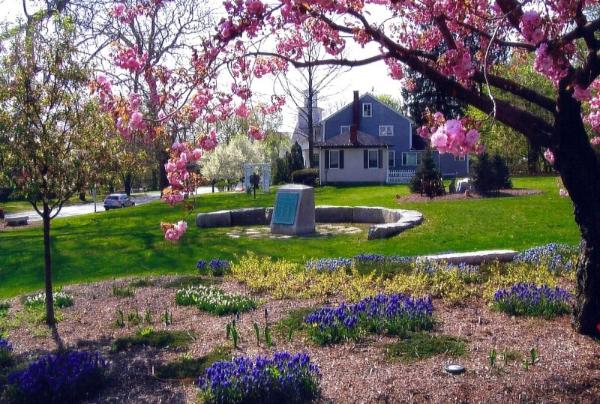
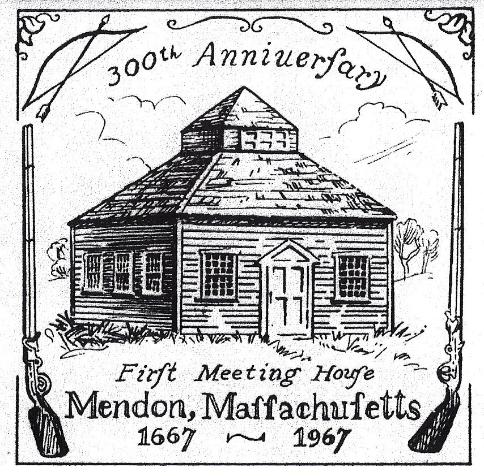
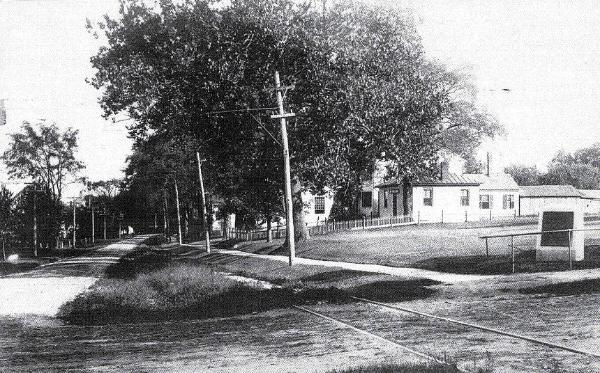
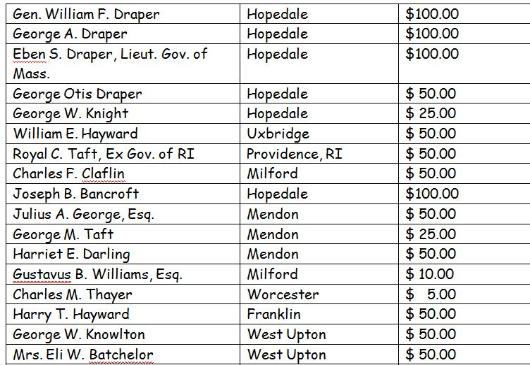
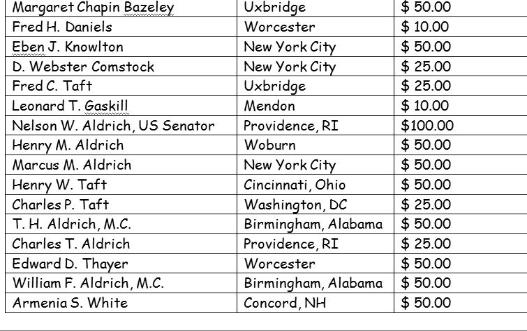
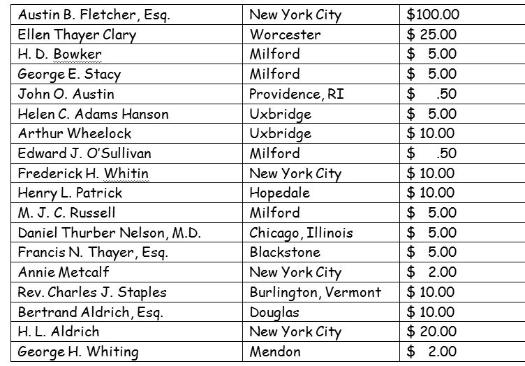
Founders Park By Emily L. Coleman, Town Clerk, August 10, 1970 Mendon Town Records, Vol. 9 Page 413. Town Meeting, November 7, 1905, Article 2. To see if the Town will vote to accept a gift of the Corner House Lot, so called, to be forever held by it solely as and for a public park and a memorial to the founders of Mendon, or act in any way in relation to securing and accepting such gift to the town. Article 3: To see if the Town will discontinue the street, way or travelled path connecting Main Street with Hastings Street near or over the north-easterly portion of The Corner Lot, so called. Article 4. Shall sections one to fourteen inclusive of Chapter twenty-eight of Revised Laws authorizing cities and towns to lay out public parks wihin their limits be accepted? Mendon Town Records, Vol. 9 Page 417. Town Meeting November 7, 1905 Article 2 Voted that the town will accept as a gift The Corner House Lot, so called, to e forever held by it as and for a public park and a memorial to the founders of Mendon, and the Selectmen or Park Commissioners are authorized in behalf of the town to accept a proper deed of said Corner House Lot for the purpose aforesaid. Yes-eighteen votes. No-two votes Article 3: Voted that the town do discontinue the street, way or travelled path connecting Main Street with Hastings Street near or over the north-easterly portion of the Corner House Lot, so called. Mendon Town Records Vol. 9 page 417,418. Adjournment from November 7, 1905 to November 13, 1905 Article 4: The voters were invited to bring in their votes “Yes” or “No” in answer to the question “Shall sections one to fourteen inclusive of Chapter twenty-eight of Revised Laws authorizing cities and towns to lay out public parks within their limits be accepted? Yes – fifteen No – none (Park Law-Land taken for or held as a park, under this chapter shall be forever kept open and maintained as public park and no building exceeding 600 square feet shall be erected on a park without leave from the General Court.) Mendon Town Records, Vol. 9, page 438. Town Meeting November 6, 1906 Article 2: Voted that the town will accept as a gift the lot of land named in Article 2 being bounded as follows, viz: Beginning at the northwesterly corner of the premises at land of Alonzo E. Brown, formerly of Rebecca L. Holmes; thence southerly with line of an old fence and bounding on said Brown’s land to land formerly Mr. Childs but now belonging to Isaac L. White; thence easterly to building on said White’s land to land belonging to the Inhabitants to Hastings Street; thence westerly with Hastings Street to point of beginning; the same to be forever held by it as and for a public park and as a memorial to the founders of Mendon; and the Selectmen are hereby authorized in behalf of the town to accept a proper deed of said land for the purposes aforesaid. Yes eighteen votes unanimous. Mendon Town Records Vol. 9, page 454. Town Meeting November 5, 1907. Article 2: To see if the town will vote to place on record any Resolution pursuant to its acquirements of the lot of land now know as Founders Park or take any action in relation to the same. Mendon Town Records, Vol. 9 page 469. Town Meeting November 5, 1907 Article 2 Voted: That in as much as at the hands of the Mendon Historical Society, by donations from descendants of the founders of the town of Mendon, secured through the efforts of its President, Marcus M. Aldrich, the town has secured the lot of land now known as Founder’s Park, that the town do extend to the Mendon Historical Society and the said donors its thanks for said gift and that the Town Clerk is hereby directed to enter upon the records of the town the names of said donors. Mendon Town Records, Vol. 9 page 471, 472 1907 Founders Park: We, the undersigned, agree to pay the sums set against our respective names for the purpose of purchasing and beautifying as a permanent memorial to the founders of the ancient town of Mendon, Massachusetts, what is known as the “Corner House Lot”, at the corner of Main and Hastings Streets in said town, where the three earliest meeting-houses were successively built, the same to be conveyed to said town and forever held by it solely for use by the public for the purpose above named, with no building thereon unless built solely and evidently for such memorial purposes, or as a library building to be itself so designated and marked as to be forever known as a memorial to such founders of the town. The foregoing subscription list is entered in this book of records in accordance with a vote of the town, passed at a town meeting held on the fifth day of November A.D. 1907, and is a true copy of said list with this exception, ie, where any of the donors were entitled to a prefix or suffix to their names it has been inserted in the foregoing list, in order that generations to come may know the type of individuals that were interested in “Mother Mendon.” Attest, Horace C. Adams, Town Clerk |

From President Taft's visit to Founders' Park. Click here to go to the complete article. |
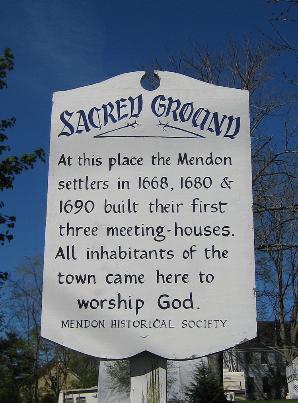
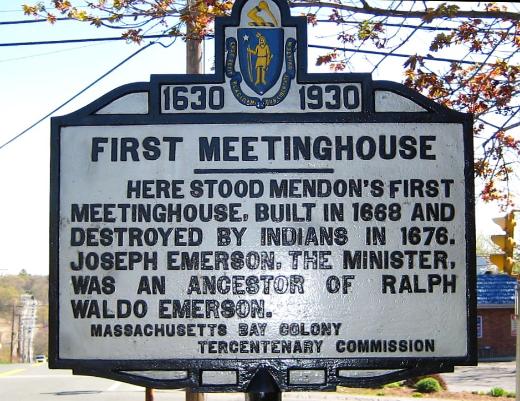
Let it be remembered then by the older settlers of all the several adjoining towns of Mendon that their ancestors took part in building one or more of three meeting houses, paid a tax for the support of the ministers who preached in them and were steady and punctual in attendance to hear the word of God preached, many of them probably riding on horseback or going on foot from four to eight miles to do so. And may it not be possible that, mingled with the soil on which we tread today, there are particles of dust which were brought there from the now adjoining towns on the feet of the men, women and children, who, in great solemnity, congregated themselves together on this, to them, most sacred ground, to pledge their vows to the God of their devotion. Let all then, who hold in high regard the ancestry from whom they have descended, keep uppermost in their minds the fact that the ground on which Mendon’s first three meeting houses stood holds a sacredness that every descendant of the early settlers of Mendon should fully recognize and be willing to lend a helping hand toward preserving it as an everlasting memorial to the honored settlers of the old mother town of Mendon. |
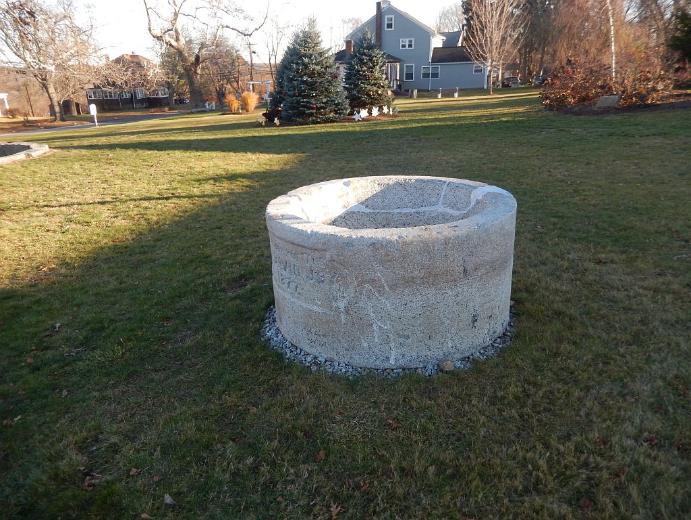
The Joy fountain on Founders' Park. The fountain was hit by a truck and badly damaged when it was on the nearby traffic island. It was repaired and moved the short distance to the park in 2016 |