The Preservation of Lake Nipmuc: 1893 - 1896
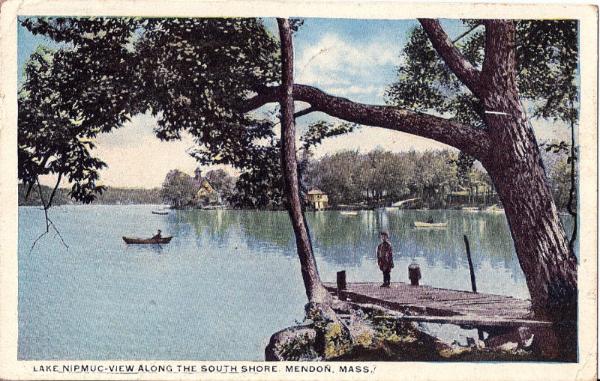
controversy and hard feelings in the mid 1890's. The people of Mendon and Uxbridge had high regard for the clear, pure water of the spring-fed lake, but when it came to how it would be used, it created such bitterness that legal action had to be taken. The peaceful stillness of the lake turned to turbulence when Uxbridge approached its mother town for help in dealing with a devastating problem that it had inherited as a victim of the Industrial Age. Its water was unfit for drinking, and it wanted to use Lake Nipmuc as its town water supply. Mendon residents regarded the lake as "Nature's beauty spot," a natural paradise for swimming, canoeing, picnics, and concerts. Its history included two Nipmuc Indian villages on its southern and western shores and the homestead of Robert and Sarah Taft in 1679 on the southeastern shore. The newly established Nipmuc Park was growing in popularity in the 1890's. Many people came to the park on weekends for family recreation. Plans were being made for an electric railway to be constructed that would bring people from other towns and boost Mendon's economy. Proud of its history, pleased with its use as a natural health and recreational resort, and optimistic about the benefits of its economic future, Mendon was well aware of the value of its treasured lake. The Blackstone, Mumford, and West Rivers provided Uxbridge with an abundance of water, but years of industrial use rendered them polluted. In 1893, the reservoirs of Uxbridge Water Works went dry on two occasions. The following year, the company predicted a water famine, as levels were so low that the water became stagnant. Several cases of malaria were reported. Some people died because of it. Health conditions were so bad that the state board of health intervened and declared Uxbridge water unfit for drinking. It requested that a legislative committee be formed to study and solve the crisis. To the surprise and shock of the people of Mendon, the Massachusetts legislature passed a law that allowed Uxbridge the right to use Lake Nipmuc as its town water supply. Mendon's response, under the leadership of Selectman Julius George, was to hire two law firms and an engineering company to prevent the law from being enacted. Residents were upset fearing that their neighboring town would drain their eighty-five acre cistern. Feelings were tense between the two towns, and a poem by Marcus Aldrich in 1896 focused on Mendon's plight. Sensing their neighbor's anger, Uxbridge residents decided it was not worth the bad feelings that had been created. They voted that they would no longer pursue the coveted Lake Nipmuc. Mendon residents dropped their lawsuit, and the Legislature became aware of what can happen when it meddles in controversial issues between towns. Within a short time the anger subsided. Relations improved. Bygones were bygones. By 1904, Uxbridge had dug two wells on Charles A. Henry's property that adequately provided for the town. Mendon's prosperity improved in 1901 when the Milford-Uxbridge Electric Railway opened and brought hundreds of people to Nipmuc Park every weekend. It became the most popular resort in the region. The storm clouds that had hovered over Lake Nipmuc in the mid 1890's were gone. The turbulence had eased. Lake Nipmuc was preserved. Richard Grady Mendon, MA Lake Nipmuc History Lake Nipmuc Postcards Mendon Menu . |
.