Norman S. Archibald (7 Apr. 1894-Sept. 1975) and Hazel M. Archibald Draper (28 Mar. 1891-Feb. 1973) were the only children of Silas Archibald and Elizabeth J. Langille Archibald, naturalized citizens originally from Canada. The family lived at 1206 Minor Avenue in Seattle. Norman Archibald (also known as “Jim”) graduated from Broadway High School in Seattle, attended the University of Washington for two years, and graduated from Cornell University. Upon the U.S. declaration of war on Germany in 1917, Archibald left home determined to become an aviator and fly on the front against the enemy. After intensive training in Texas and France, Archibald served as a Chasse pilot in France, becoming a member of the 95th Air Squadron, First Pursuit Group on 1 July 1918. Lieutenant Archibald made daily flights at the front until 8 Sept., when his SPAD aircraft was shot down behind enemy lines in St. Mihiel and he was taken prisoner by the Germans. Archibald was held in prison camps at Karlsruhe and elsewhere, not released until 28 Nov., eleven days after the signing of the Armistice. Archibald recounts his experience, from his decision to become an aviator in 1917 through his reunion with his sister Hazel in France after his release, in his 1935 book Heaven High, Hell Deep. Archibald returned to military service in 1942, receiving a commission as captain in the U.S. Army Air Forces. Norman Archibald died in 1975. The Norman Archibald Charitable Foundation was established in 1977 to support youth and child development programs; higher education and libraries; museums and the performing arts; and family and social services in the Puget Sound region of Washington State.
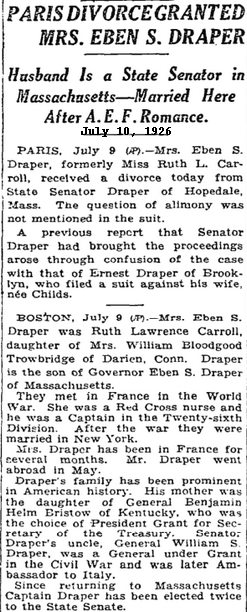
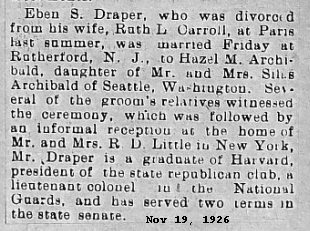
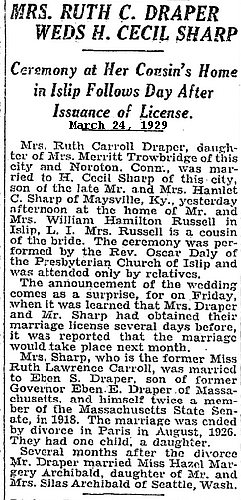
Hazel Marjorie Archibald also served in France in World War I, with the American Red Cross in Paris. She was accepted for service in Oct. 1918; her decision was likely influenced by the capture and imprisonment of her brother in France the previous month. Archibald, a talented pianist and popular songwriter, worked as an entertainer in the Red Cross Hospital Hut Service, later transferring to the vocational department, inspired by her experience with wounded GIs. While in France in late 1918, Archibald continually sought information on the condition and whereabouts of her brother, finally reuniting with him in Tours, France, in early December. Hazel Archibald continued to serve in the Red Cross until May 1919. After the war, Hazel Archibald worked as a staff writer for the Seattle Times, penning a regular feature on a variety of topics under the pseudonym “Dora Dean.” Archibald moved to New York around 1921, where she successfully pursued her career as a songwriter and performer, self-publishing the sheet music to her songs, one of which was used in a musical production on Broadway. On 12 Nov. 1926 Hazel Archibald married Eben S. Draper, son of a former Massachusetts governor and himself a member of the Massachusetts House and Senate during the 1920s. Living in Boston, she continued composing music at least until the 1940s; in 1944 she created an operetta to be performed as a benefit for United Nations Relief.
These papers, photographs, and scrapbooks document the intersecting experiences of a Seattle brother and sister serving in France during World War I. Through collected newspaper clippings, telegraphs, notes, and photographs, mostly from 1918, emerges a picture of a young aviator captured by the Germans in France and the dedication of his sister who, while working tirelessly entertaining GIs in France, continued to search for her captured younger brother. Additional materials fill out the portrait of Hazel Archibald Draper as an ambitious and successful pianist and songwriter, and of Norman Archibald making his mark as a successful author, with his firsthand account of his wartime experience, which was reviewed positively in newspapers nation-wide.
The collection is open to the public for research by appointment.
Cite as: Norman Archibald and Hazel Archibald Draper Papers, Museum of History & Industry, Seattle.