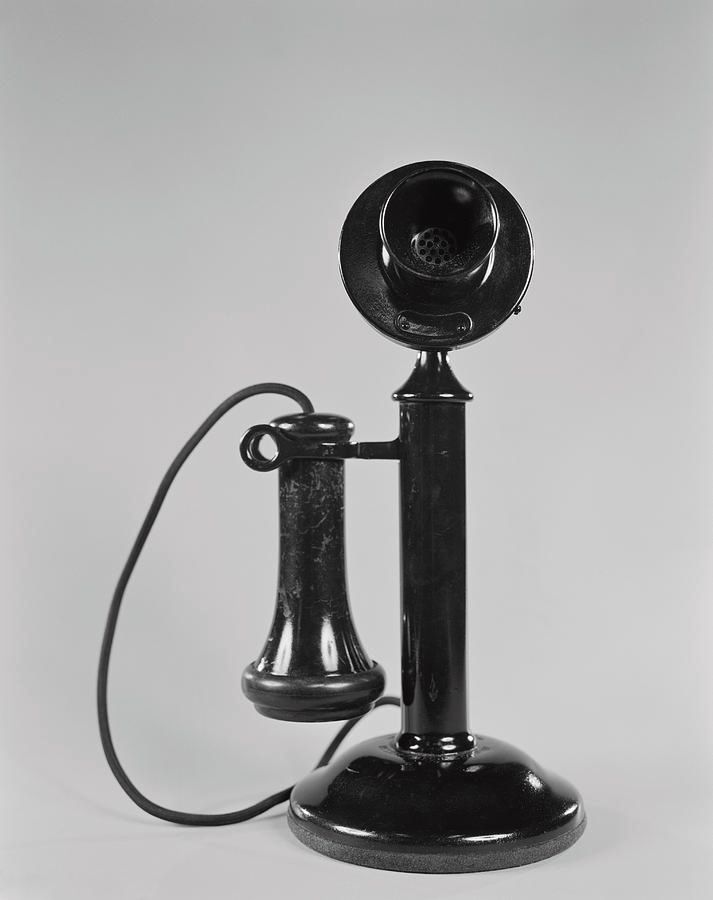
This model of telephone was being used in 1919 when the Bancroft Library trustees reversed their decision in 1912 and voted to install a phone at the library and see if it would prove to be useful.
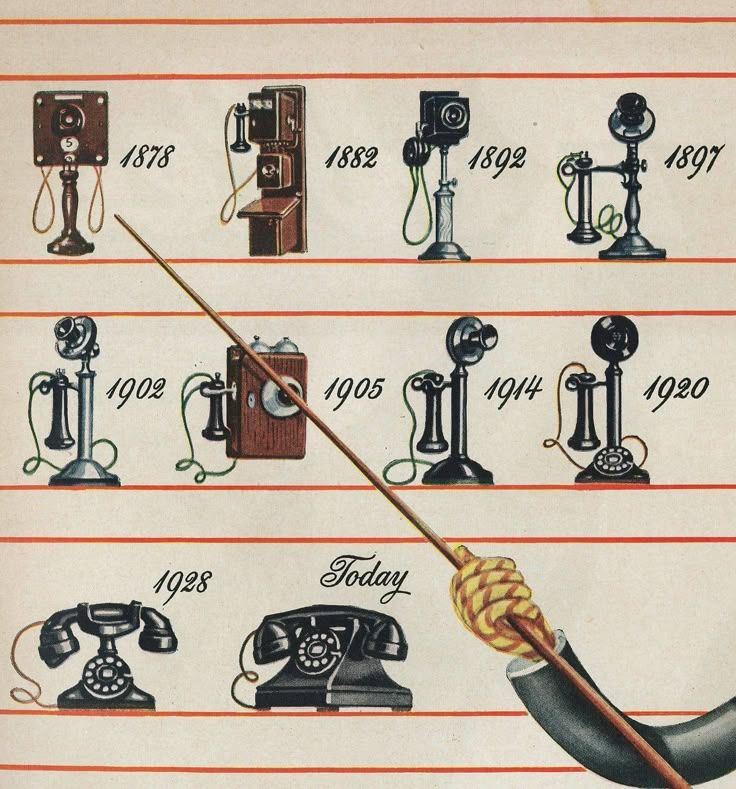
Phone Service, 1880
By Gordon E. Hopper
Residents of Milford are known to have been using the telephone as early as 1880. The success of the instrument was evidently instantaneous because three years later, the telephone company was petitioning the town for permission to place more poles on the public streets.
The telephone company continued its expansion until it was recorded in 1888 that there were 75 telephone lines in the town. Plans were underway in 1887 to extend the service to Hopedale and to Upton. The development continued and in 1901, telephone wires were being placed underground and in 1930, the poles on Main Street were removed
A sharp improvement in Milford telephone service was noted in 1913 when a battery system was installed. Previously, the turning of a small crank would ring a bell in the telephone operator’s ear. This gave access to central and the operator would make the connection. With the new battery system in operation, the lifting of the receiver automatically signaled central.
Further extensive improvements were made in 1929 with more than $25,000 being expended in various phases of the work.
The telephone service and equipment sustained a tremendous blow in 1921, when on November 27, 28 and 29, one of Milford’s worst sleet storms paralyzed all traffic and raised havoc with all wiring. Out of 911 circuits and 2,208 telephones, 725 circuits went out of service and the toll lines leading out of town went down. Only the lines to Framingham and Boston, which were in cable, withstood the storm. More than 70 men were added to the crews to repair the damage as quickly as possible.
In 1915, there were 1,176 subscribers in Milford with ten operators. Five years later the number had reached 1,723, with a corresponding increase in the number of operators.
In 1923, the operators went out on strike, but service was not materially delayed. In 1925, there were 2,867 subscribers, and by 1930 there were 3,509 with 30 operators. The increase in 15 years was approximately 300 percent.
Another electrical form of communication – the telegraph – had a history synonymous with that of the telephone, although the non-local nature of the system made it less noticeable.
The local telegraph business steadily increased and later, the Morse keys were replaced with automatic sending and receiving machines, thus making of the telegraph a speedier and more accurate public servant. As early as 1907, a man by the name of George L. Cooke on Silver Hill advanced the claim of discovering the wireless. Records fail to show that Cooke received much credit for his discovery, but it is comforting to know that a Milford person was working an apparatus which is today now widely used.
Research material used in this feature story was supplied by Robin Philbin of Milford. Milford Daily News.
Here’s how the Draper Company could be reached in 1903, according to a Draper publication from that year. “Telegrams are telephoned to us from the Milford office of the Western Union Co. If addressed to Hopedale they will reach us promptly. Our long-distance telephone call is Milford 26-13, 12 and 3.” Textile Texts, p. ix, 1903
Voted – That for various reasons, especially the compactness of the town population, a telephone is unnecessary in the library. Bancroft Library Trustees, 1912
The question of a telephone was presented and it was voted to install a two party line in the Library as an experiment. Bancroft Library Trustees, 1919 At a meeting several months later, the trustees’ minutes report, The most noticeable improvement this year has been the installation of telephone service. This has already proved of great assistance, and its increasing use indicates that the patrons of the Library appreciate its convenience and the many advantages it affords.
The High School, the South and the Dutcher Street buildings have been supplied with telephone connections. This much needed convenience is greatly appreciated. We are trying to arrange the use of these so that they will not become a nuisance, but rather a help to all concerned, especially in case of emergency. Electric lights in the buildings not now equipped, will be of service on the short and dark days. Carroll H. Drown, Superintendent of Schools, 1920.